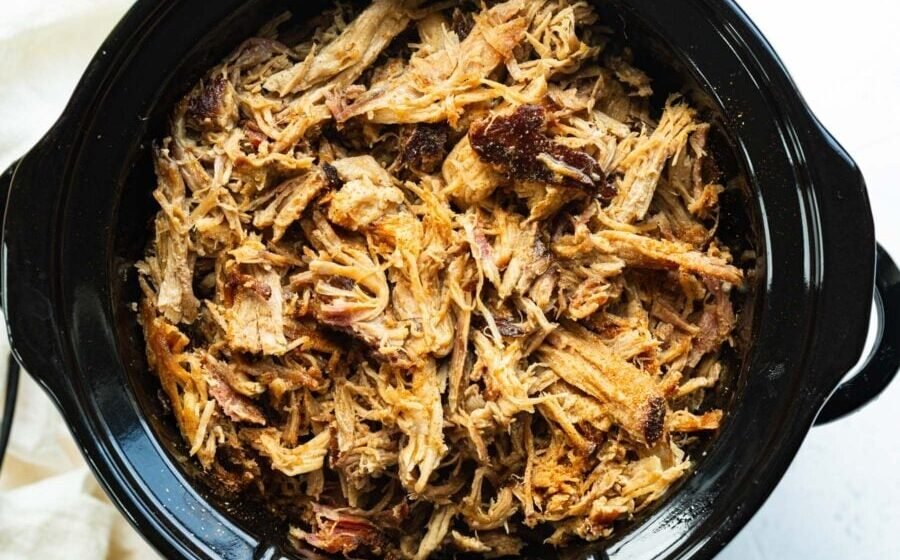

Ridiculously tender pulled pork doesn’t require a smoker, and it certainly doesn’t require waking up at 2 a.m. The slow cooker can do the heavy lifting, leaving the oven and smoker free while you get on with your day. This approach delivers juicy, fall-apart pork that works for Sunday tacos and still leaves plenty extra for the freezer.
The appeal is simple: a well-marbled pork butt, a smoky homemade dry rub, and a long, gentle cook. An optional apple cider brine adds another layer of flavor, but it can be skipped when time is short. The result is pork with enough built-in flavor to take leftovers in completely different directions—tacos one night, sandwiches the next, nachos after that.
Why This Pulled Pork Works
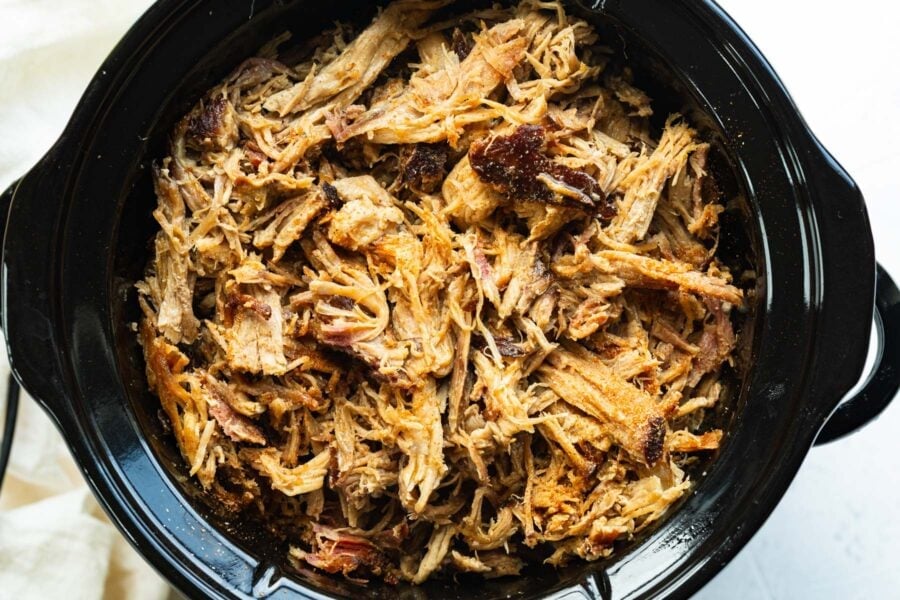
- Incredibly tender and juicy: Cooking pork butt low and slow gives connective tissue time to break down until the meat practically falls apart.
- Big flavor: An optional apple cider brine and a smoky homemade dry rub pack flavor into every bite.
- Set it and forget it: The slow cooker does the work while you get on with your day.
- Leftovers are gold: A big batch can be used for tacos, sandwiches, nachos, baked potatoes, rice bowls and more. It also freezes beautifully.
The Best Cut of Pork for Pulled Pork
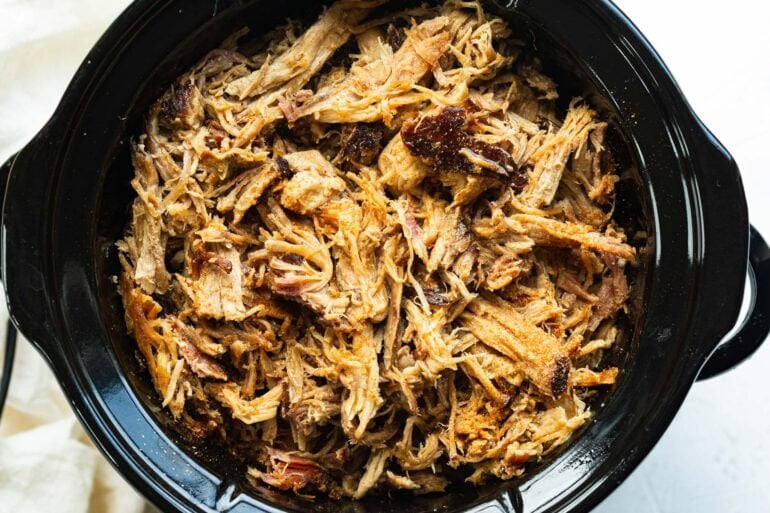
Pork butt—also called pork shoulder or Boston butt—makes the best pulled pork. It’s a well-marbled cut from the upper portion of the pork shoulder, and all that fat and connective tissue breaks down during the long cooking time, giving you incredibly juicy, tender pork that’s easy to shred.
Some readers have asked, “Can I use pork loin?” The truth is, a pork loin has a low fat content and its muscle will not break down the same as the shoulder or butt. It literally will not turn out. If you have pork loin in your freezer, try an orange glazed pork loin recipe instead.
Cuts that should never be used for pulled pork include Boston butt, picnic shoulder, pork loin, and pork tenderloin.
What to Know When Buying Pork Shoulder or Butt
- Always buy your pork shoulder bone in. Bones can be a hassle with meat, but they’re exactly what you want for flavor, moisture and fall-apart goodness.
- Never buy a totally trimmed and bare butt. Always look for a nice fat pad on top.
- Ask the butcher rather than just grabbing from the cooler. It won’t cost extra to walk up to the meat counter and ask for a pork shoulder with a nice fat pad on top, which brings more fat into the pork and makes it juicier as it cooks.
Ingredients You'll Need
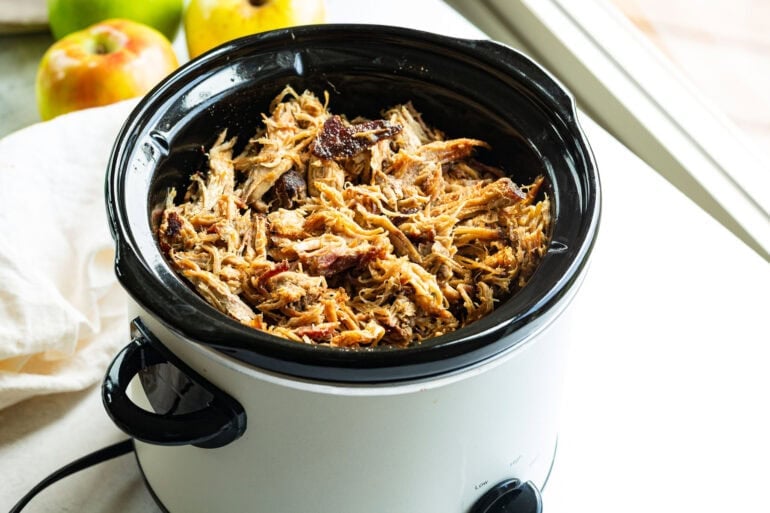
- Pork Butt: Bone-in pork butt is the favorite cut for pulled pork. Look for one with plenty of marbling and leave that fat cap on top while it cooks. Pork butt is part of the shoulder and is particularly well suited to low-and-slow cooking.
- Brown Sugar: Adds sweetness to the dry rub and helps balance the savory spices and heat.
- Smoked Paprika: This is where some of that smoky flavor comes in without actually using a smoker.
- Garlic + Onion Powder: The savory flavor base.
- Chili Powder, Cayenne + Cumin: Add warmth, smokiness and a little kick.
- Dry Mustard: Gives the rub a subtle tang and depth.
- Apple Cider: If brining the pork, apple cider adds sweetness and apple flavor that pairs so well with pork.
- Apple Cider Vinegar: Cuts through the richness of the pork and adds tang while it cooks.
- Orange Juice: Adds sweetness and acidity to the cooking liquid.
Pro tip: The brine is optional. It adds another layer of flavor, but if you’re short on time, you can skip it and head straight to the dry rub and slow cooker.
Do You Have to Brine Pulled Pork?
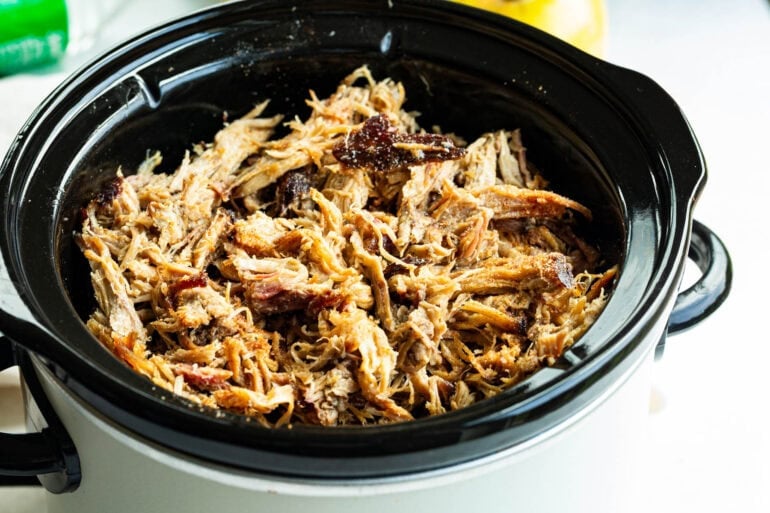
No. The apple cider brine is totally optional. If there’s time, brining the pork adds another layer of flavor to such a large cut of meat. But if dinner needs to get going, skip the brine, coat the pork really well with the dry rub and head straight to the slow cooker.
How Much Pulled Pork Do You Need?
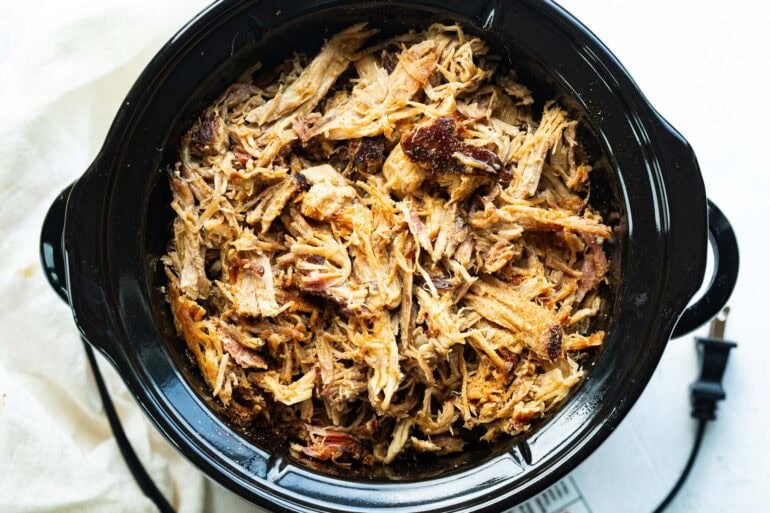
Plan for about 1/2 pound per person unless you know you have light or heavy eaters, then adjust accordingly. However, it always makes sense to prepare enough to freeze, as pulled pork freezes amazingly well—especially when using a foodsaver.
How Long Do You Cook Pulled Pork in a Slow Cooker?
For a 5–8 pound pork butt, plan on about 10–12 hours on LOW. A particularly large roast may take closer to 13 hours. That’s the beauty of crockpot pulled pork—most of that time is completely hands-off.
The exact cooking time will vary depending on the size and shape of the pork and the slow cooker, so tenderness is ultimately more important than the clock. The pork is ready when it pulls apart easily with a fork and the internal temperature reaches 195°F to 205°F.
Why Is My Pulled Pork Tough?
If the pork isn’t shredding easily, it probably isn’t done yet. People often assume tough pork means it was cooked too long. With pulled pork, that’s not necessarily the case. The connective tissue needs enough time to break down. Tough meat? Keep it cooking.
What to Do If Your Pulled Pork Is Tough and Not Shredding
It is not done until the internal temperature reaches 195°F to 205°F, or a meat thermometer or fork slides in with zero resistance—like a hot knife going into softened butter. If the meat doesn’t easily fall apart with minimal pressure, place it back in the slow cooker and keep it cooking.
Never trust the cook time for pulled pork alone. Cooking pork by temperature and tenderness is essential for a good pulled pork dinner. Because no cut of meat is the same, cook time cannot account for differences in fat content, bone structure, or how your slow cooker cooks. Test temp and texture, and be willing to check early and keep it going late if needed.
How to Make Tender, Juicy Pulled Pork Without a Slow Cooker
If the slow cooker isn’t for you, smoked pulled pork and pulled pork in the oven are both phenomenal alternatives.
How to Get Crispy Edges Without a Smoker
This is how things like carnitas are made, and it works great for adding just a touch of crispiness to a pulled pork sandwich. Get out a cookie sheet and turn the oven to broil. Place the pulled pork directly on the pan with a drizzle of canola oil and toss to coat. Slide the pan under the broiler until the pieces start to crackle and brown. Serve immediately.
Tips for the Best Pulled Pork
- Use pork butt. Don’t be afraid of the fat. Pulled pork needs a well-marbled cut that can handle a long cooking time.
- Cook it on LOW. For a big roast like this, the long, gentle cook is preferred.
- Keep the fat side up. There’s no need to trim off the entire fat cap before cooking. Place the pork fat-side up and remove any large pieces of unrendered fat when shredding the meat.
- Don’t keep lifting the lid. Every peek lets heat escape. Trust the slow cooker and leave it alone.
- Go by tenderness, not just the clock. Slow cookers and pork butts vary in size. If a fork stuck into the pork still fights back, it needs more time. The goal is meat that pulls apart with very little effort.
- Don’t throw away those juices. Toss some of the cooking juices back into the shredded pork. That’s where so much flavor and moisture are hiding.
- Save some dry rub for the end. Adding that final tablespoon after shredding wakes all those spices back up and gives the finished pork another punch of flavor.
What to Serve with Pulled Pork
The best thing about making a huge batch of pulled pork is turning it into completely different meals all week long. Try it:
- Stuffed into pulled pork tacos
- Piled onto a bun for a pulled pork sandwich with BBQ sauce, coleslaw, and pickled red onions
- Served over rice or in a rice bowl
- Loaded onto a baked potato
- Scattered over nachos with plenty of cheese
- Folded into quesadillas
- Added to burritos
- Served over mac and cheese
- Tossed onto a salad
- Or eaten straight from the fridge at 10 p.m. while no one is looking
One thing to love about this slow cooker pulled pork is that it isn’t cooked in BBQ sauce. The pork itself has so much flavor, which means leftovers can be taken in totally different directions. Make tacos tonight, BBQ pulled pork sandwiches tomorrow, and nachos the next day.
Pro tip: If saucy pulled pork is the goal, make one of your favorite BBQ sauces for pulled pork.
Storage Tips
- Refrigerator: Let the pulled pork cool, then store it with some of its juices in an airtight container in the refrigerator for 3–4 days.
- Freezer: Crockpot pulled pork is one of the best meats to freeze. Place cooled pork and a little of the cooking liquid in freezer bags or freezer-safe containers and freeze for up to 3 months. Freezing pulled pork using a foodsaver works especially well. To reheat, place the frozen bag in a pot of water, turn the burner to medium and let it reheat sealed in the bag. It stays so juicy.
- Reheating: Reheat gently with some of the reserved juices, a splash of broth, apple juice, a little oil or a little BBQ sauce so the meat stays moist. This can be done on the stovetop or in the slow cooker.
The Takeaway
This slow cooker pulled pork proves you don’t need a smoker or a 2 a.m. wake-up call for ridiculously tender, flavorful pork. Let the slow cooker do the work, then enjoy it in tacos, sandwiches, nachos and more all week long.