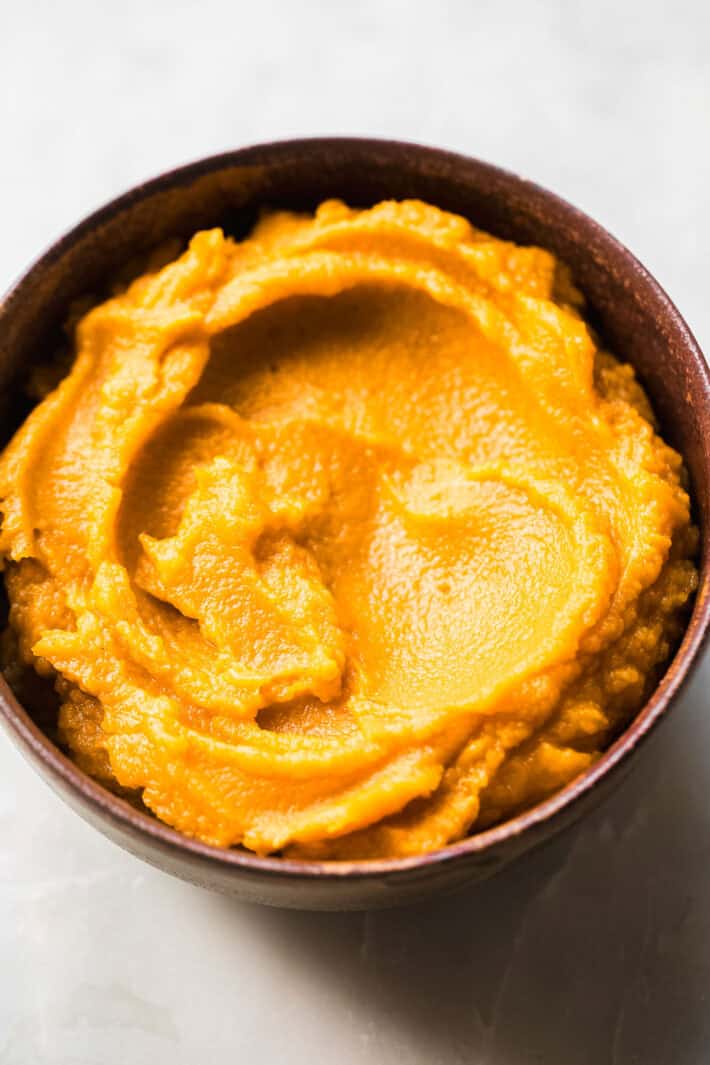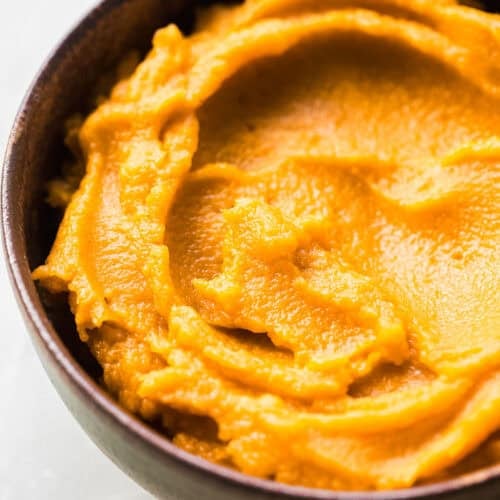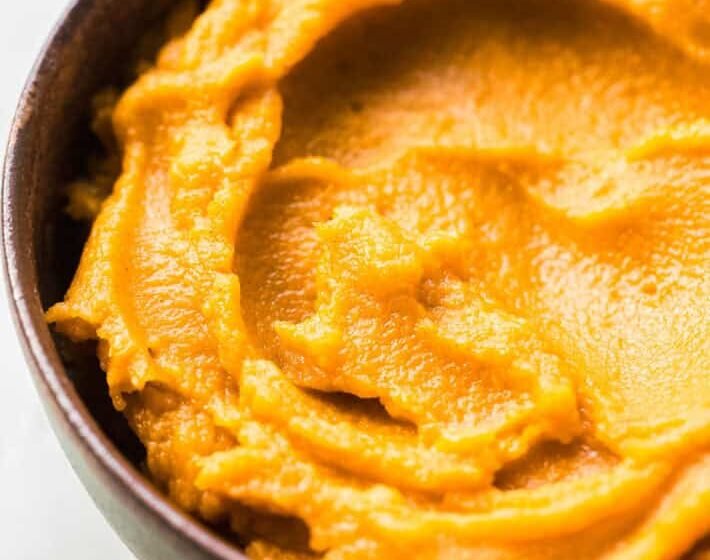

When sugar pumpkins start piling up in grocery stores each October, it’s tempting to reach for a can of puree instead. But roasting a whole pumpkin at home is simple, and the result tastes far better than anything from a can. You also get more control over the flavor and texture, whether you’re baking a dessert or preparing a savory dish.
This guide walks through roasting a sugar pumpkin and turning it into smooth homemade puree. The same method works for sweet and savory versions, and you can easily adapt the seasonings to suit whatever recipe you have in mind.
Why Roast a Pumpkin Instead of Using Canned Puree
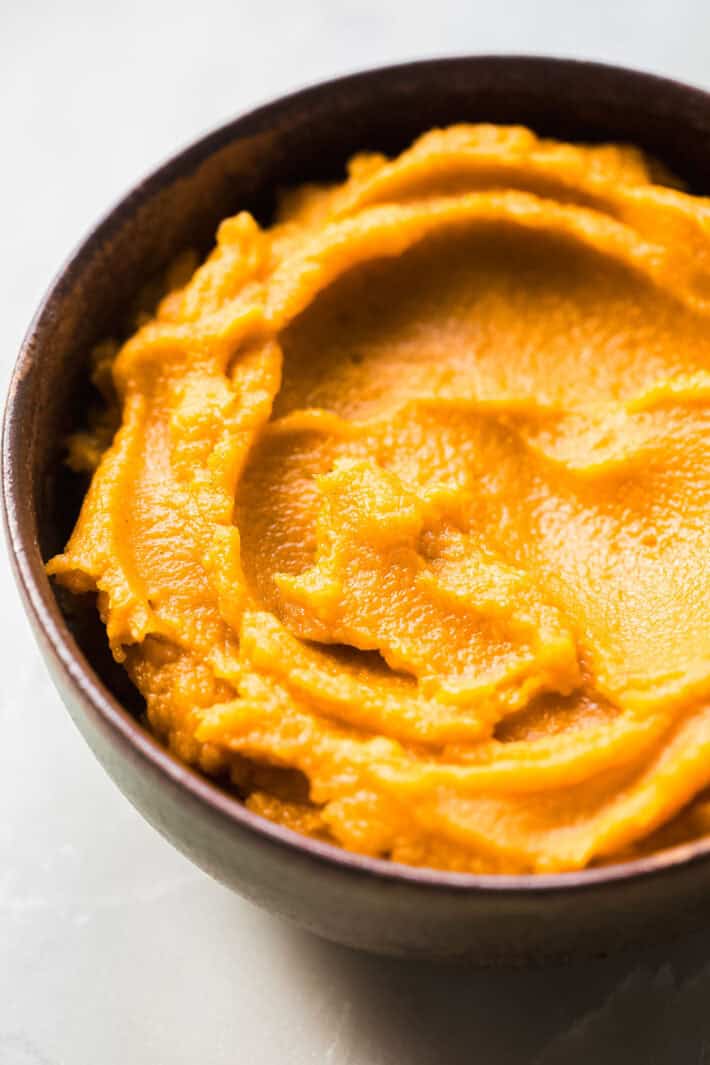
Homemade pumpkin puree has a noticeably better flavor than canned. Roasting also lets you decide exactly what goes into it. For a pumpkin pie, try using half pumpkin and half butternut squash—the result is a pie with a deeper, more pronounced pumpkin flavor.
The ingredient list below is for a sweet puree, but you can leave out the sugar and cinnamon and use the savory variation instead. That version works well for pumpkin soup, risotto, or chili.
Ingredients for Pumpkin Puree
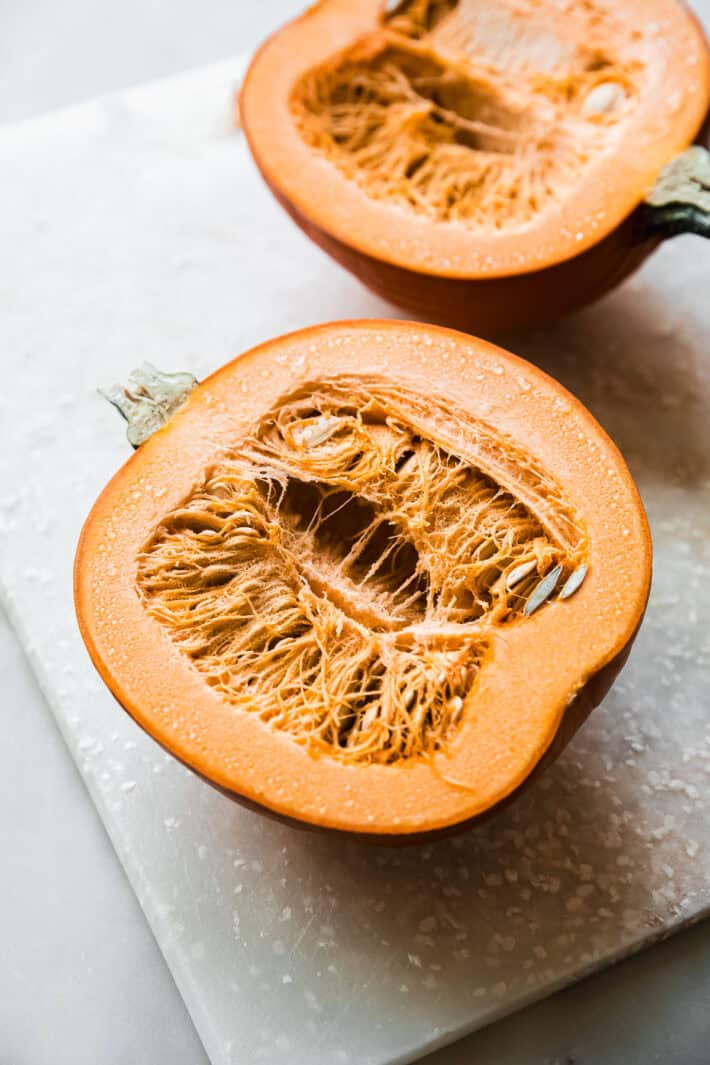
Sweet Puree
- Sugar pumpkin or pie pumpkin: Use the small pumpkins found at the store, not the giant jack-o’-lantern-sized ones. No other pumpkin variety is recommended.
- Cane sugar: The sugar caramelizes in the oven, which gives baked goods a better result.
- Ground cinnamon: Adds a subtle flavor and plenty of aroma. The pumpkin smells wonderful when it comes out of the oven.
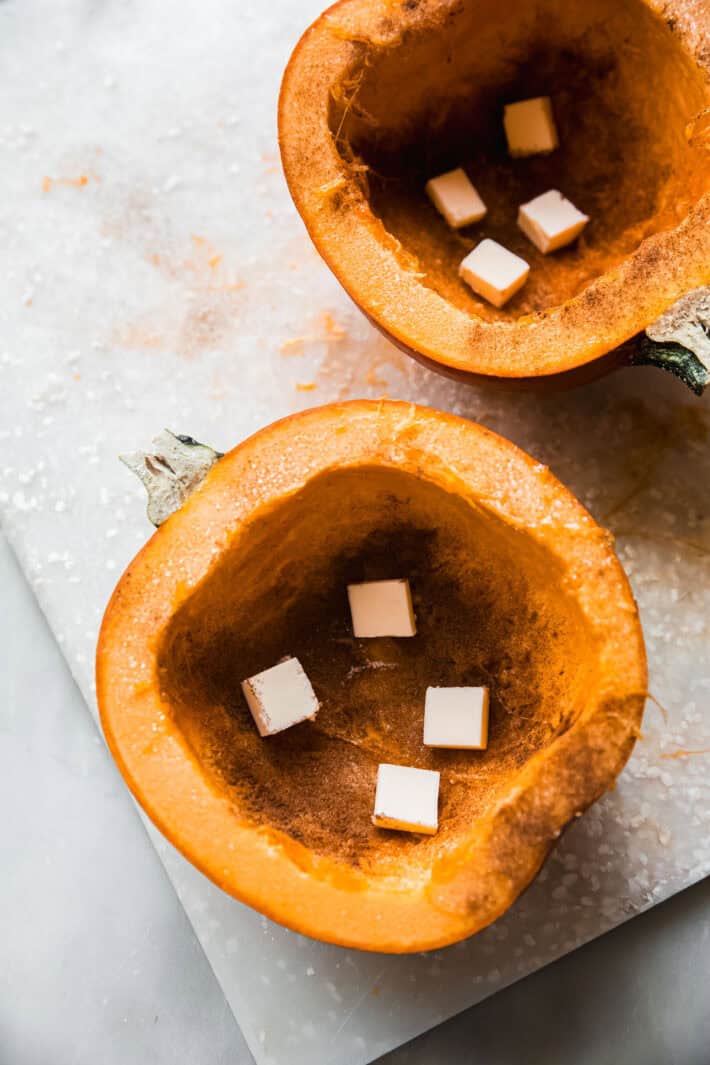
- Butter: Use cubed butter rather than melted—it will melt naturally during roasting. Coconut oil can be used instead if you prefer to skip the butter.
Savory Puree
- Butter: 1 tablespoon, cut into small cubes.
- Nutmeg: ⅛ teaspoon.
- Kosher salt: ¼ teaspoon.
Feel free to make the recipe your own. A good rule of thumb is to sprinkle on a hint of whatever your recipe calls for. If you plan to use paprika, for example, a light dusting on the pumpkin slices will carry that flavor through.
Why Roast at 425ºF
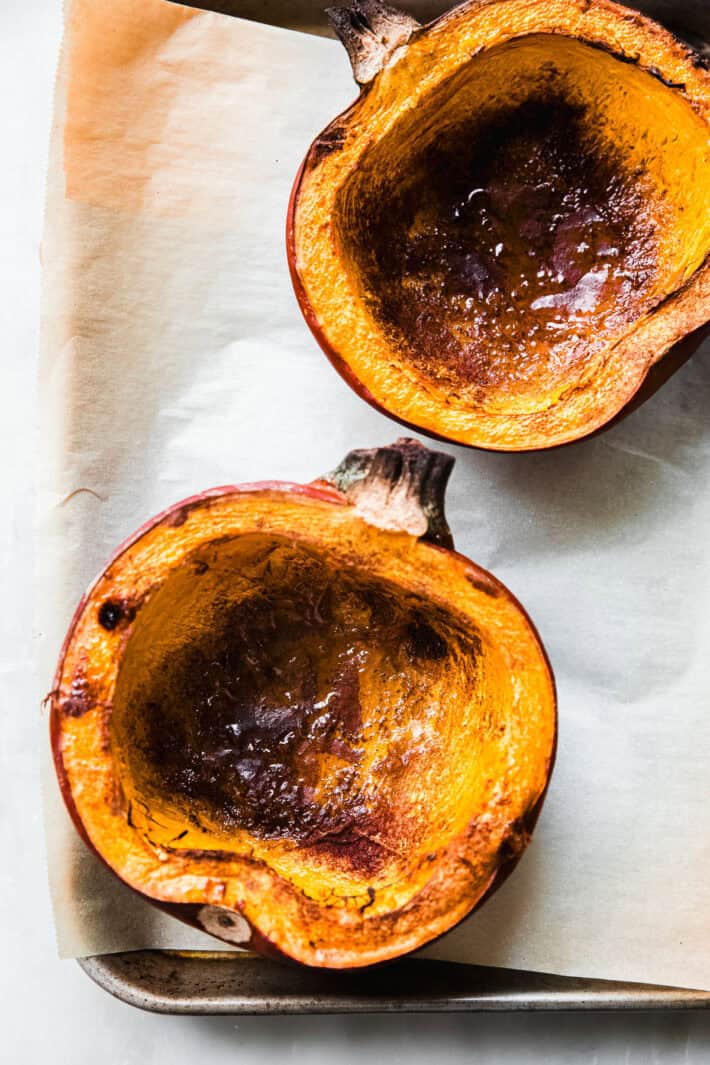
Roasting the pumpkin at 425ºF serves two purposes. First, the higher temperature encourages the Maillard reaction and helps caramelize the pumpkin’s natural sugars. The added sugar caramelizes as well, giving baked goods more depth of flavor—think of the difference between butter and brown butter.
Second, fresh pumpkin contains a lot of water. Roasting at 350–400ºF tends to leave you with a watery result that needs straining and reducing. A higher temperature evaporates much of that moisture and concentrates the flavor, leaving you with a velvety-smooth, deeply flavored puree.
How to Roast a Whole Pumpkin
Prep: Preheat the oven to 425ºF. Line a baking sheet with foil and parchment paper to make cleanup easier.
Clean: Using a sharp knife, slice the pumpkin vertically down the center through the stem. Scoop out the seeds and ribs with a large spoon. You can wash and roast the seeds separately, or discard them.
Sprinkle: Scatter the sugar and cinnamon over the flesh side of the pumpkin halves, or use the savory ingredients if you’re making that version. Place the halves on the parchment-lined baking sheet and drop the small cubes of butter into the cavity of each pumpkin.
Roast: Once the oven is preheated, place the pumpkins inside and roast for 45–55 minutes, or until fork tender. Pierce the flesh—if the fork goes through without resistance, the texture is perfect. If the flesh starts browning at any point, cover it loosely with foil.
Cool: Remove from the oven and let the pumpkin cool for several minutes.
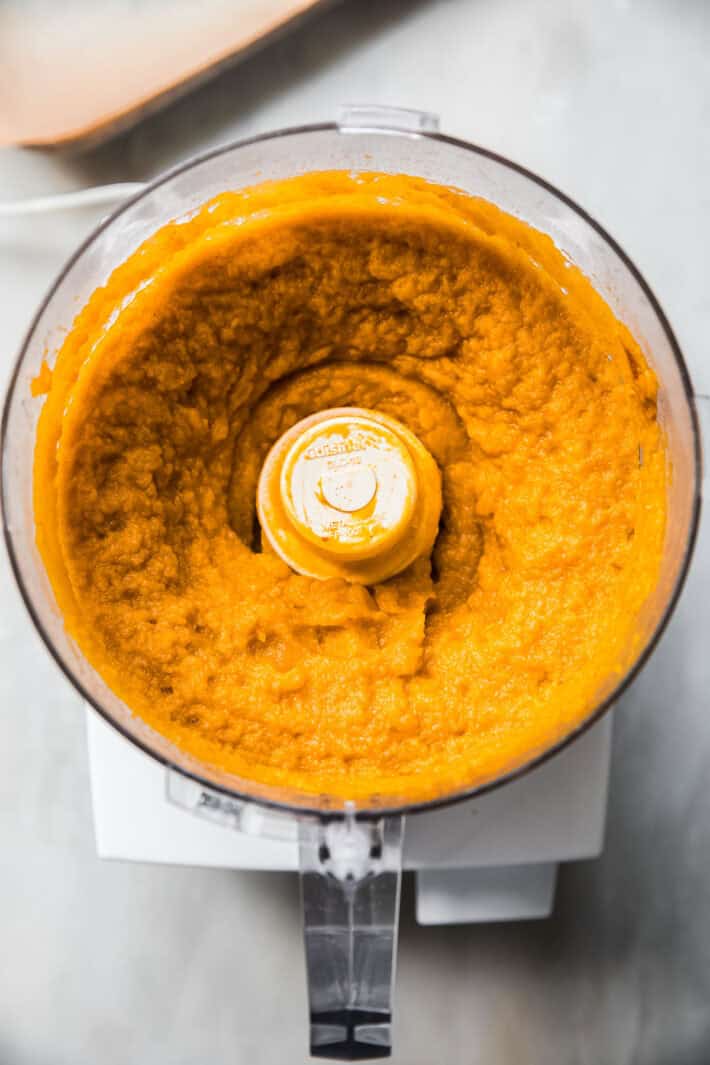
Puree: Peel the skin and place the flesh in the bowl of a food processor or a high-powered blender. Puree the pulp to your desired consistency.
Optional: For an extra-smooth puree, run it through a mesh strainer to remove any stringy bits and reduce the liquid, especially if you’re substituting homemade puree for canned in a recipe.
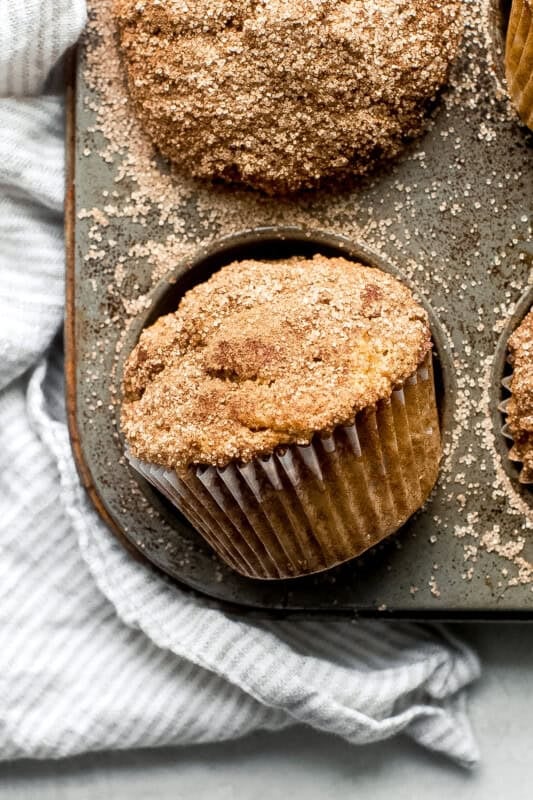
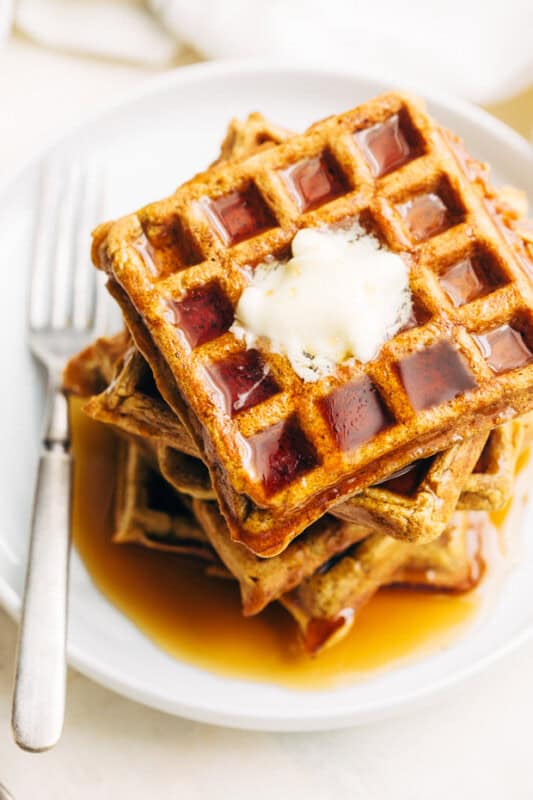
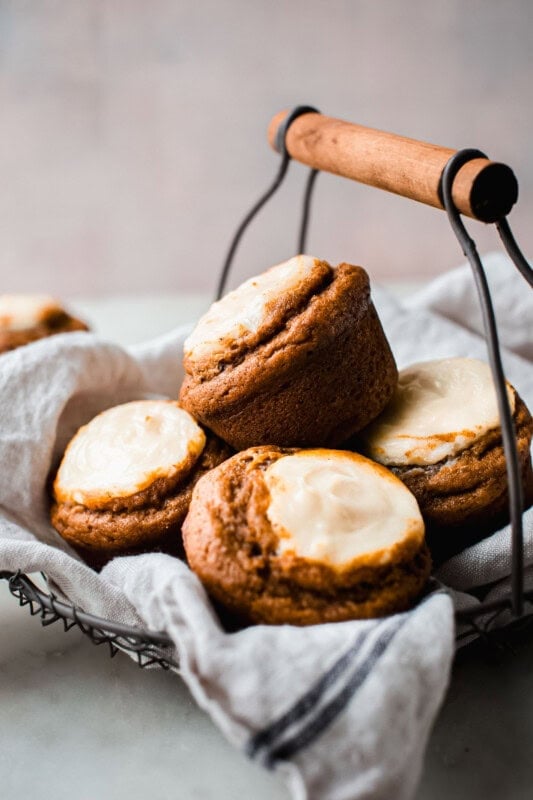
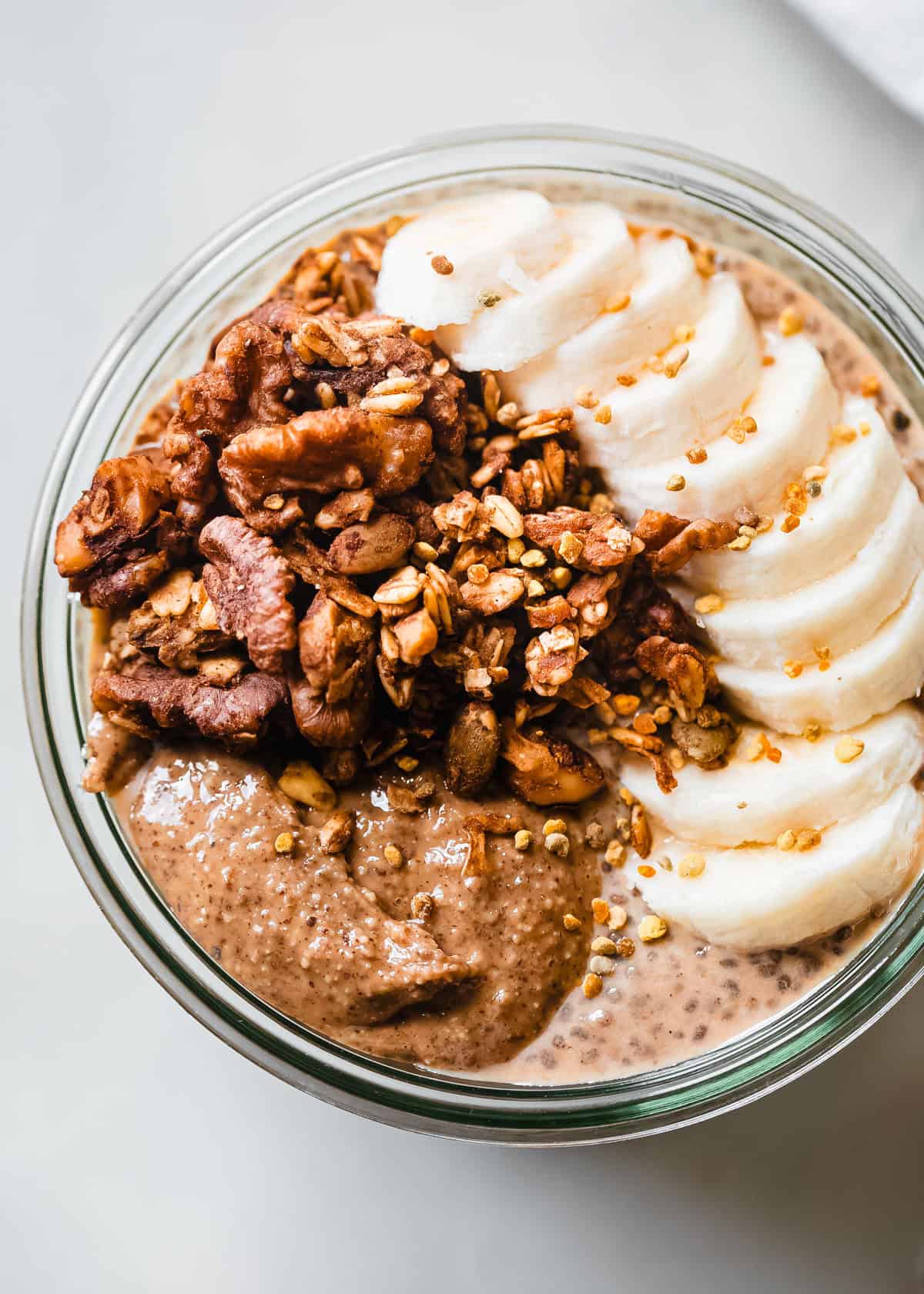
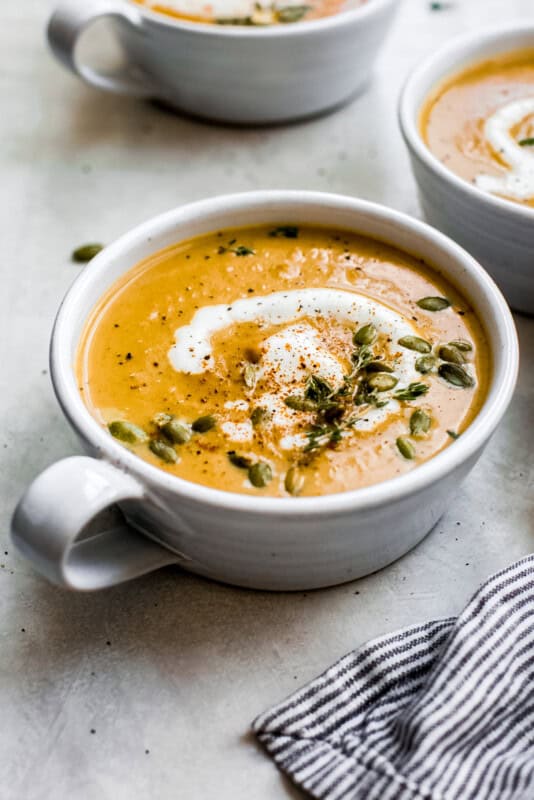
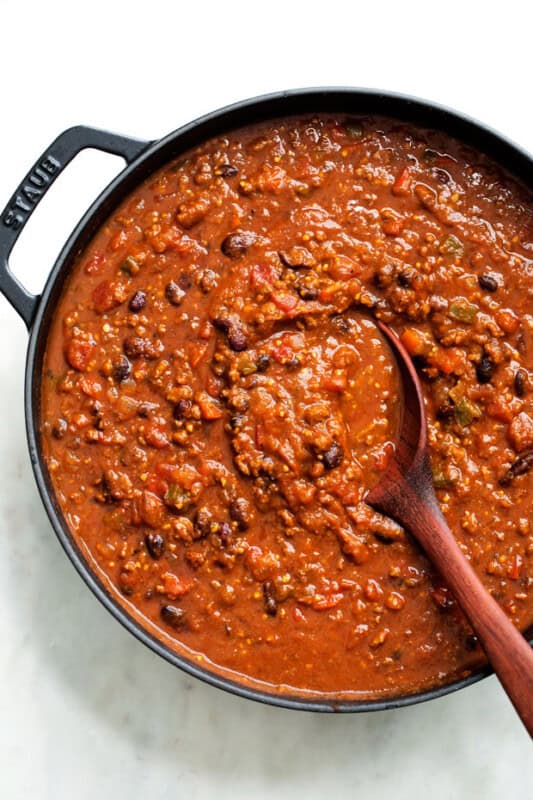
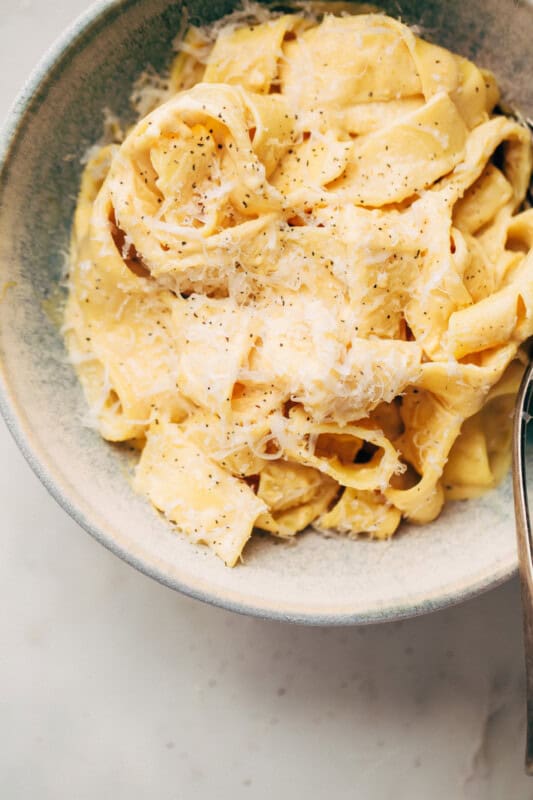
Store and use: Keep pumpkin puree in an airtight container in the refrigerator if you plan to use it within 1–2 days, or freeze it in measured containers for later. Use it in pumpkin bread, pumpkin muffins, chili, French toast, waffles, soups, chia puddings, and of course pies.
Tips for Substituting Homemade Puree for Canned
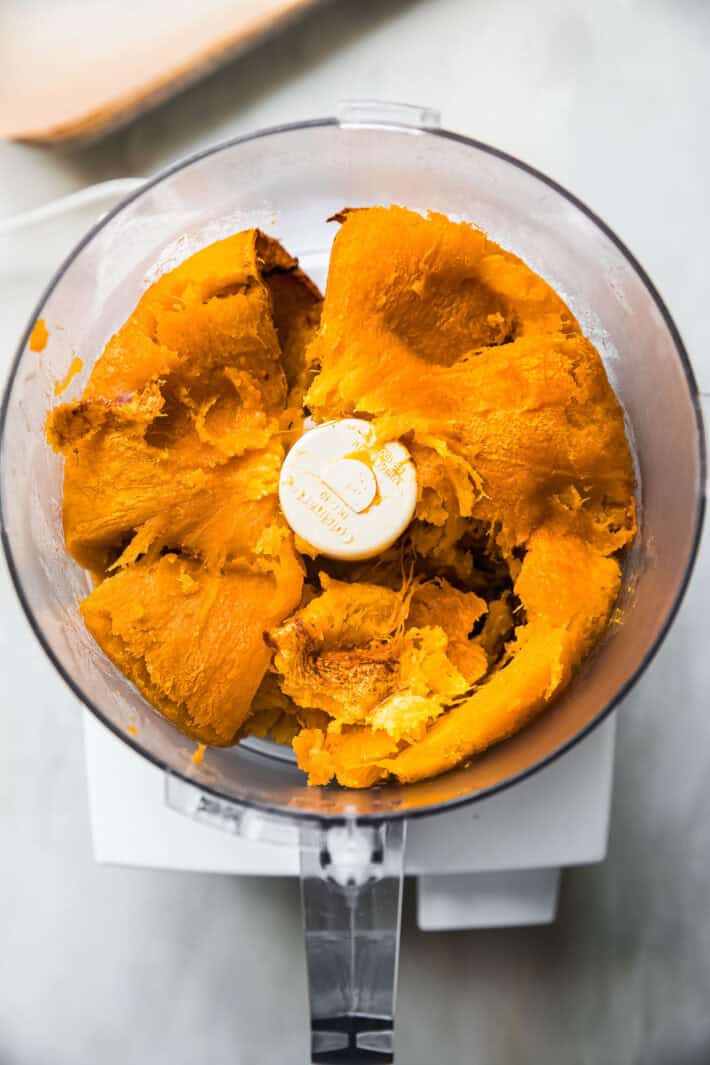
Homemade roasted pumpkin has a thinner consistency than canned pureed pumpkin. To get the right texture for baked goods, strain the puree through a mesh strainer to reduce the liquid. Let the strainer sit over a bowl for 10–15 minutes, and it should be ready to use.
Recipe Details
- Prep time: 10 minutes
- Cook time: 50 minutes
- Calories: 368 kcal
- Author: Marzia
- Equipment: Quarter sheet pan, parchment paper, cutting board
Nutrition
- Calories: 368 kcal
- Carbohydrates: 67 g
- Protein: 9 g
- Fat: 12 g
- Fiber: 5 g
- Sugar: 33 g