Eggs are one of the most versatile foods in any kitchen — breakfast, lunch, dinner, snacks, baking, salads — but they are also one of the most inconsistently cooked. One day the yolk is runny, the next day it’s chalky. The whites stick to the shell. The poached egg spreads into a cloud in the water.
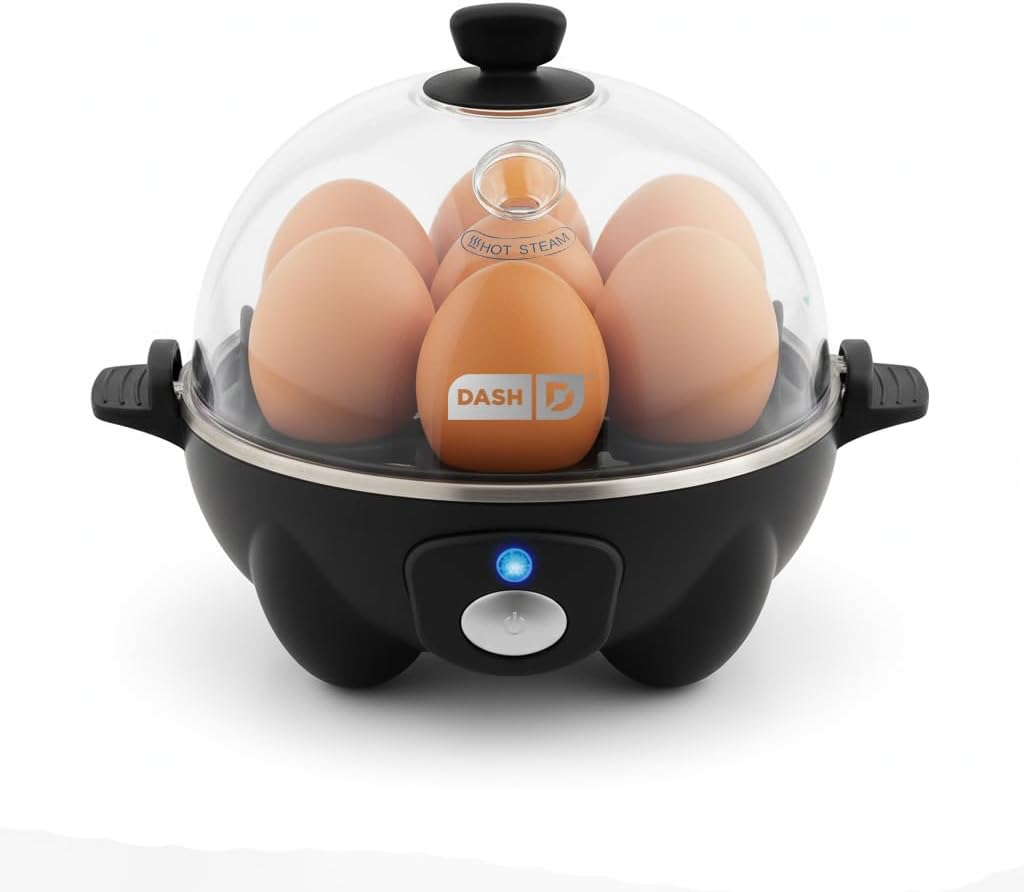
The Dash Rapid Egg Cooker (Boiler, Poacher & Steamer, Holds 7 Eggs, Black) is a small countertop appliance designed to remove the guesswork from cooking eggs by using steam, a timer based on water volume, and simple accessories.
This article explains how the appliance works, what the different functions do, how to use it safely, and where it fits in a kitchen routine. It is informational only, with no product reviews, testimonials, star ratings, or purchase instructions, in accordance with Amazon Associates policy.
(Disclosure: As an Amazon Associate I earn from qualifying purchases.)
What Is a Rapid Egg Cooker?
Unlike a pot on the stove, which heats water by direct contact with a burner, the Dash Rapid Egg Cooker is a steam cooker.
It has three main parts:
- A heating plate at the base
- A plastic body that holds accessories and vents steam
- A domed lid that traps steam
You add a measured amount of water to the heating plate, place eggs in a tray, cover with the lid, and turn the unit on. The heating plate boils the water, creating steam that cooks the eggs. When the water evaporates, a temperature sensor shuts the unit off and sounds a buzzer.
The “rapid” part comes from the efficiency of steam. Steam transfers heat to the egg more quickly than boiling water, and because the appliance is small and enclosed, it comes to temperature fast.
The black colorway is neutral and fits with most small appliances. The unit is compact — about the size of a large coffee mug — and stores easily in a cabinet.
The Three Functions: Boil, Poach, Steam
The name lists three functions because the accessories allow three different cooking methods, all using the same steam principle.
1. Boiler (Hard, Medium, Soft Boiled Eggs)
This is the primary function. A seven-egg tray with individual holes holds eggs upright. You pierce the large end of each egg with a pin (included in the measuring cup) to release air and prevent cracking. The water measurement determines doneness: less water = softer yolk, more water = harder yolk. The markings on the measuring cup correspond to soft, medium, and hard for the number of eggs being cooked.
2. Poacher
A two-egg poaching tray sits on top of the boiling tray. It has two non-stick wells. You crack an egg into each well, add water to the heating plate according to the measuring cup, and steam poaches the eggs without them touching water directly. This avoids the swirling water technique and produces a contained, round poached egg.
3. Steamer (and Omelet Maker)
The poaching tray also functions as an omelet bowl. You beat eggs with ingredients, pour them into the tray, and steam cooks them into a fluffy omelet or scrambled egg patty. The same tray can steam small portions of vegetables, dumplings, or fish — anything that fits and cooks by steam in 10-15 minutes.
All functions use the same process: measure water, add food to tray, cover, turn on, wait for buzzer.
How the Water Measurement System Works
The key to the Dash cooker is that it does not use a timer you set. It uses water volume as the timer.
The included measuring cup has lines marked “soft,” “medium,” “hard,” and numbers for 1-7 eggs. For example, cooking 7 hard boiled eggs requires more water than cooking 1 soft boiled egg, because there is more cold mass to heat and you need a longer steam time.
You fill the cup to the appropriate line, pour the water onto the heating plate, and turn the unit on. The heating plate boils the water away. When the last of the water evaporates, the plate gets hotter than 212°F (100°C), the sensor trips, the unit shuts off, and the buzzer sounds.
This is why it’s important to use the measuring cup and cold water from the tap. Using hot water or guessing the volume changes the cooking time and the results.
The pin on the bottom of the measuring cup is used to pierce the egg shell. This creates a tiny hole that lets expanding air escape during cooking, reducing the chance of the shell cracking.
Capacity and Size: 7 Eggs
The boiling tray holds 7 eggs in individual wells. This is a practical number for most households: enough for a week’s worth of breakfast for one person, or a single batch of deviled eggs for a family.
The eggs sit upright in the tray, which helps center the yolk. This is useful for deviled eggs or presentation where you want the yolk in the middle of the white.
The poaching tray holds 2 eggs. The omelet bowl holds about 2-3 beaten eggs with additions.
The entire unit has a small footprint, roughly 6 inches in diameter. It is designed for counters, dorm rooms, RVs, and small kitchens where a full pot and burner feel like too much for a few eggs.
Materials and Safety: BPA Free and Dishwasher Safe
“BPA Free” means the plastic components are made without Bisphenol A, a chemical once common in food plastics. The trays, lid, and measuring cup are made from food-safe plastics.
“Dishwasher safe” refers to the removable accessories: the boiling tray, poaching tray, lid, and measuring cup can be placed on the top rack of the dishwasher. The base (with the heating plate and electrical components) should never be immersed in water. It is wiped clean with a damp cloth after it cools.
The lid has a steam vent and a cool-touch handle. Steam is hot and can cause burns, so the lid should be lifted away from the face, using the handle, and tilted to direct steam away.
The unit has automatic shut-off, which is a safety feature. It will not continue heating once the water is gone, reducing the risk of overheating if forgotten.
Cooking Eggs: What to Expect From Each Setting
Understanding the results helps you choose the right water level.
Soft Boiled: Whites are set, yolks are runny and warm. The egg is delicate and best eaten with a spoon from an egg cup or over toast. Requires the least water.
Medium Boiled: Whites are fully set, yolks are custardy and jammy — set around the edges, soft in the center. Good for ramen eggs, salads, or eating out of hand. Requires medium water.
Hard Boiled: Both white and yolk are fully set. Yolk is firm and crumbly, not green (green yolks result from overcooking, which the measured water prevents). Good for deviled eggs, egg salad, snacks. Requires the most water.
Poached: Whites are set in a compact shape, yolks are runny. Because they are steamed in a tray rather than swirled in water, they are more uniform and less wispy than traditional poached eggs.
Omelet/Scrambled: Eggs cook into a fluffy, soufflé-like texture from the steam. Because there is no direct heat, they do not brown, but they are tender and moist.
Cooking times vary by doneness and egg count, but generally range from 6 minutes (1 soft egg) to 16 minutes (7 hard eggs), all unattended once started.
How to Use It: Step-by-Step for Boiled Eggs
- Measure water. Use the measuring cup. Choose the line for the number of eggs and desired doneness. Use cold water.
- Pierce eggs. Use the pin on the bottom of the measuring cup to make a small hole in the large end of each egg.
- Pour and place. Pour water onto the heating plate. Place the boiling tray on the base. Place eggs in the tray, pierced end up.
- Cover and turn on. Put the lid on. Press the power button. A light indicates it is on.
- Wait. The unit will steam and then buzz when done.
- Cool. Immediately remove eggs and place in ice water for 2 minutes if you want easy peeling and to stop cooking. This is especially important for soft and medium eggs.
For poached eggs: spray the poaching tray wells with non-stick spray, crack eggs into wells, use the water measurement for poached, and proceed as above.
For omelets: beat eggs, pour into the omelet tray with fillings, use the omelet water measurement, and proceed.
Peeling Hard Boiled Eggs: Why Steam Helps
Many people find eggs cooked in a steam cooker easier to peel than traditionally boiled eggs.
There are two reasons:
- The quick cooking and immediate ice bath create a temperature shock that separates the membrane from the shell.
- Piercing the egg allows the air pocket to expand and create space between egg and shell.
For best peeling: use eggs that are not ultra-fresh (5-7 days old peel easier than same-day eggs), ice bath immediately after cooking, and peel under running water starting at the large end where the air pocket is.
Cleaning and Maintenance
After each use and once the unit is cool:
• Remove trays and lid and wash with warm soapy water or place on the top rack of the dishwasher
• Wipe the heating plate with a damp cloth. Do not use abrasive scrubbers, which can damage the non-stick coating on the plate
• If mineral deposits build up on the heating plate (white film from hard water), wipe with a mixture of water and vinegar, then rinse with a damp cloth
Do not immerse the base in water. Do not use metal utensils on the heating plate.
Store the measuring cup and pin inside the unit or with the trays so they are not lost.
Where an Egg Cooker Is Most Useful
Consistency: If you like your eggs cooked the same way every day, the water measurement system delivers repeatable results without watching a pot.
Multitasking: Once started, the cooker needs no attention. You can make coffee, toast, or pack lunches while it works and the buzzer tells you when it’s done.
Small Spaces: Dorm rooms, offices, RVs, and apartments with limited burners or cookware benefit from a single-purpose appliance that only needs an outlet and water.
Meal Prep: Cooking 7 hard boiled eggs at once for the week takes one cycle and no pot to wash.
Low Effort: No need to bring a pot of water to boil, set a timer, and watch to prevent boil-overs. The appliance manages the process.
Limitations to Understand
An egg cooker is a single-purpose tool. It will not replace a stovetop for general cooking.
• It only cooks by steam, so you cannot fry eggs or get browning
• It has a fixed capacity (7 eggs, 2 poached eggs)
• It requires the measuring cup and the correct water volume — guessing does not work well
• Very large eggs or small eggs may cook slightly differently than medium/large, the size the measurements are calibrated for
• It is another appliance that takes up storage space
It is most valuable to people who cook eggs frequently and value the set-and-forget convenience.
Comparing to Stovetop Methods
Boiling in a pot: Requires a pot, burner, timer, and attention. Water volume is less critical. Easier to cook large batches beyond 7 eggs.
Poaching in water: Requires technique to create a vortex and keep the egg together. Produces traditional poached eggs but has a learning curve.
Egg cooker: Requires no technique, manages time automatically, and contains the mess. Limited to the capacity of the trays.
Neither method is objectively better; they serve different preferences. The cooker trades flexibility for convenience and consistency.
Tips for Best Results
- Use cold eggs and cold water. Starting temperatures affect cooking time.
- Pierce every egg. It takes seconds and prevents cracking.
- Ice bath for hard and medium eggs. It stops cooking and aids peeling.
- Spray the poaching tray. Even “non-stick” benefits from a light spray.
- Don’t open the lid early. Releasing steam changes cooking time and can result in undercooked eggs.
- Descale the plate. If you have hard water, wipe the plate with vinegar water weekly to prevent buildup that can affect heating.
Final Thoughts
The Dash Rapid Egg Cooker works by using a simple physical principle: a fixed amount of water produces a fixed amount of steam time. By measuring the water, you measure the cooking time, and the appliance shuts off automatically when the water is gone.
The accessories expand the function from just boiled eggs to poached eggs and steamed omelets, all using the same base and process. It is BPA free, the removable parts are dishwasher safe, and its small size makes it easy to store.
For someone who eats eggs regularly, likes a specific doneness, and prefers an appliance that can be started and ignored, it provides consistency without supervision. It does not make eggs taste better — it makes them more predictable and the process less active.
You can find the Dash Rapid Egg Cooker (Boiler, Poacher & Steamer, Holds 7 Eggs, Black) on Amazon and view its included accessories and specifications there.
Leave a Reply